
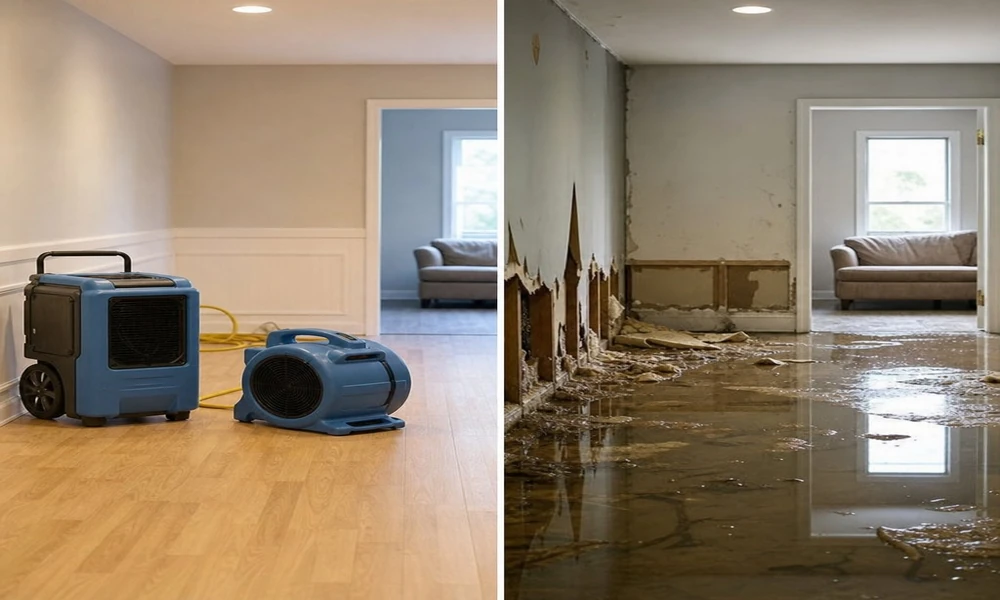
Fans and dehumidifiers drying a water-damaged room
It only takes a few seconds for a broken pipe, a leaking washing machine or a leaking roof to flood your property, and by that time, things are already a mess. During that time, you’re probably confused about which type of service you actually need, whether you’re looking for water damage mitigation services or water damage restoration services. While these two services are somewhat related, they aren’t quite the same thing. It’s important to understand the difference between these two types of services so you can act quickly and minimize the damage.
Water Damage Mitigation
Mitigation refers to a water damage event and preventing it from affecting other parts of the property. The main goal isn’t to get the property back to how it was before; rather, you want to contain the problem and preserve any materials that may be salvageable. Depending on the circumstances, this can include identifying the cause of the water leak, removing standing water, relocating movable items, discarding damaged items, setting up fans and dehumidifiers, and measuring the moisture level of the floors, walls, and ceilings. It’s crucial to mitigate water damage as soon as possible, as water can spread quickly under the floorboards, inside the walls, and through porous materials. The quicker you mitigate the water damage, the less likely you are to have costly repairs, foul odors, and mold growth (click this site) in the future.
Water Damage Restoration
Water damage restoration happens after you’ve contained the issue and allowed it to dry out. Restoration consists of repairing or replacing the damaged parts of the property so the building is safe, functional, and aesthetically appealing. Because water damage can vary significantly, there are many types of restoration services available. Minor leaks may just require new paint and some drywall patching, while major floods may require new insulation, flooring, cabinetry, molding, and drywall. Examples of water damage restoration services include: drywall and ceiling repair, flooring replacement, new insulation, painting, cabinetry or shelving repair/replacement, and content cleaning. These restoration services typically take longer to complete because there are more things to consider, such as materials selection, the number of tradesmen required, and details in the finish work.
Are Mitigation and Restoration Services Connected?
Although mitigation and restoration are two distinct processes, they’re often part of one project. For example, you don’t want to start restoring materials until the property has been thoroughly dried. If you put new flooring over a wet subfloor, new paint over a wet wall, or new drywall over a wet surface, the trapped moisture will eventually cause serious issues, as you can read at www.niehs.nih.gov/health, down the line. That’s why a water damage project is best completed in the following order: identify the cause of the water leak and stop it, remove any standing water and materials that can’t be saved, dry out the building and measure the moisture levels in the floors, walls, and ceilings, clean up the exposed areas as necessary, and restore any remaining damage. Some projects will be completed very quickly, while others will require a lengthy period of drying or even extensive restoration. The duration of the project depends on the nature of the water leak, the materials that were exposed to the water, the level of contamination, and the amount of time the materials have been in contact with the water.
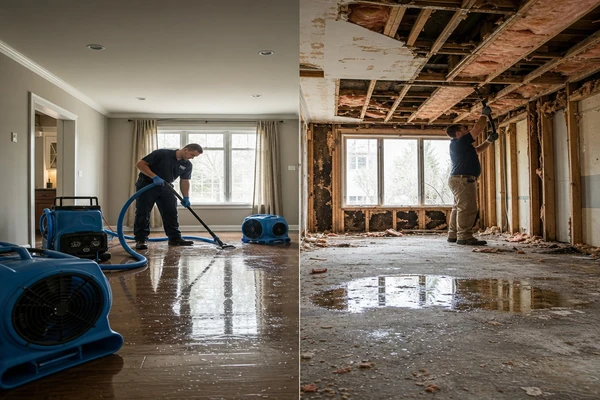
Contractor repairing drywall after water damage
Which Service Should I Use?
If there’s water damage in your home, you’ll need mitigation first to stop any more damage and get the area dry. Signs that you need mitigation include wet carpet, swollen baseboards, peeling paint, moldy odor, and water damage in areas that shouldn’t be getting wet. If your home is already dry but still has water damage, you’ll probably need restoration services. Again, make sure that the property is dry before starting the restoration work; even if it appears to be dry, there can still be moisture hiding under the surface.
In addition, documentation is critical between these two stages. Take pictures of affected rooms, note moisture levels, and keep an itemized list of discarded belongings and completed work before removal.
Some insurance policies have separate provisions for emergency restoration versus reconstruction. Providing adequate documentation, cost estimates and invoices helps avoid confusion and supports a better outcome during the claims process.
In addition, the origin of the water will dictate how materials can be treated. A clean water supply may make it possible for some objects to be dried and kept, but sewage or floodwater may require professional cleaning, protective gear, and discarding of porous materials that cannot be effectively cleaned.
Getting Your Home Back to Normal
There’s a clear difference between water mitigation vs. water damage restoration. Mitigation is about containing the problem and stopping the water damage from spreading, while restoration is about fixing the damage that has already occurred. Using both types of services in conjunction with each other will result in a faster, more successful recovery. After all, mitigating water damage first and restoring the property second allows homeowners to take care of the emergency and fix the long-term consequences.
