
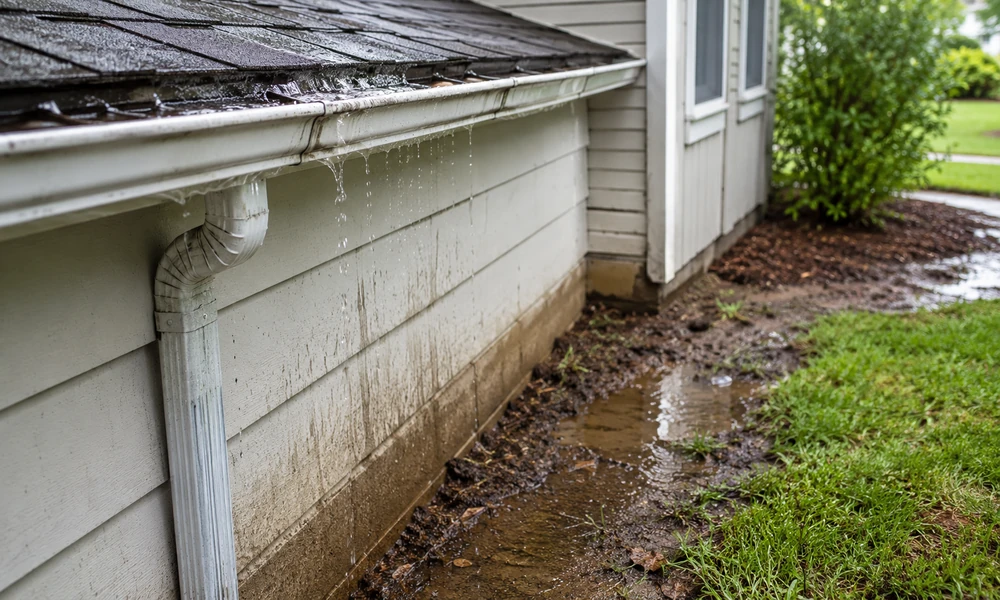
Water appearing where it should not be is one of the easiest exterior home problems to notice-and one of the easiest to misdiagnose.
A homeowner may see water running down the siding and assume the gutter itself is leaking. In another case, water pouring over the front edge may look like a failed gutter when the real problem is restricted flow. Even the location of a puddle on the ground does not always reveal where the water first escaped.
Knowing what to observe can help you describe the problem accurately, decide how quickly it needs attention, and avoid treating the wrong part of the drainage system.
Start With the Way the Water Is Escaping
The behavior of the water often provides the first useful clue.
A true gutter leak usually means water is escaping through a place that should contain it. Seams, joints, corners, end caps, and other connection points are worth observing because they create natural transitions within the system. Small openings or deteriorated sealing material can allow water to drip through rather than continue toward the downspout.
Overflow looks different. Instead of dripping from a specific joint, water may spill over the upper edge of the gutter. That suggests the gutter is receiving water faster than it is moving it away.
The distinction matters because sealing an apparent “leak” will not correct a flow problem, while cleaning alone will not repair a joint that is allowing water through.
When possible, watch the system from a safe position at ground level during normal rainfall. Avoid climbing a ladder or accessing a wet roof simply to investigate the source.
Look at Where the Water Appears-and Where It Started
The location of visible water can be misleading.
Suppose water is running down the siding beneath one corner of the gutter. The obvious assumption is that the corner directly above it is leaking. But water can travel along an exterior surface before becoming visible, so the first wet spot is not necessarily the original failure point.
Look for patterns rather than a single droplet.
Does the water consistently appear beneath a seam? Is it coming over the front edge? Does staining begin behind the gutter rather than below a joint? Is one section holding water while the rest appears to drain normally?
These observations help separate a localized leak from a broader drainage issue.
Dry-weather clues can also be useful. Discoloration, peeling finishes, persistent dirt streaks, or signs that water repeatedly follows the same path may indicate an area worth investigating during the next rainfall.
When a Visual Check Isn’t Enough
Some gutter problems are straightforward from the ground. Others are difficult to identify because the visible symptom occurs several feet away from the actual source.
A small seam leak, for example, may only become obvious when the gutter contains enough water. A connection can also look normal when dry but behave differently once the drainage system is operating.
This is where diagnosis becomes more important than guessing at a repair. If the source cannot be confidently identified, professional gutter inspection services can help determine where water is escaping and whether the affected area is appropriate for sealing or needs a different type of repair.
That distinction can prevent unnecessary work. The goal should be to correct the cause of the water problem rather than simply covering the most visible symptom.
Don’t Confuse Overflow With a Leak
Overflow deserves separate attention because it can look dramatic even when the gutter itself has no opening.
Leaves, roof debris, or other material can restrict the path water needs to follow. A downspout or outlet that is not moving water effectively can also contribute to water accumulating upstream.
During rainfall, notice whether overflow is concentrated in one place or happening across a longer section. Also watch whether the nearby downspout appears to be moving water.
After conditions are dry and safe, visible debris can provide another clue. However, the absence of debris at the top of the gutter does not automatically confirm that the entire drainage path is clear.
This is another reason diagnosis should come before repair. Applying sealant to a gutter that is overflowing from restricted drainage will not address the underlying issue.
Pay Attention to What Happens After the Water Leaves the Gutter
A gutter system does more than collect roof runoff. The water also needs a clear path away from the building after entering the downspout.
Observe the discharge area during rainfall. If water exits the downspout but immediately collects near the house, the gutter may be doing its part while the drainage arrangement at ground level deserves attention.
Likewise, an unexplained wet area does not automatically mean the gutter directly above it has failed.
Thinking of the system as a complete water path-from roof edge to gutter, gutter to outlet, downspout to discharge point-makes troubleshooting more useful. Each stage can produce a different visible symptom.
Know When a Small Problem Deserves Attention
Not every drip means a gutter system needs major work. But recurring water in an unintended location is worth understanding.
The practical approach is to observe the conditions under which the problem occurs, identify whether you are seeing leakage or overflow, and note exactly where the water first becomes visible. Photos taken safely from the ground can also make it easier to compare what happens during different rain events or explain the issue later.
Avoid assuming that every problem has the same solution. Cleaning, resealing, adjustment, component repair, and replacement address different conditions.
Conclusion
Water around a gutter provides clues, but those clues need to be interpreted correctly.
A drip beneath a joint, water spilling over an edge, staining behind the gutter, and pooling near a downspout may all look related while pointing to different problems. Watching how water moves through the entire drainage path is often more informative than focusing only on where it eventually lands.
By identifying whether the issue is a leak, an overflow, or a drainage problem first, homeowners can make better maintenance decisions and address the actual cause instead of repeatedly treating the symptom.
